
CASE STUDY Borderon et fils
From the order to the dough
Client
The problem
The challenge
Putting the customer's order, the dough for two days out and Saturday morning's till on one single spine.
Borderon had gone looking for a system. Off-the-shelf tills exist, and so do specialised ERPs, but none of them could do what a bakery demands: take the order online, then work back to the dough that has to be mixed forty-eight hours before delivery. A bakery runs the calendar backwards — the delivery time sets the mixing time, not the other way around.
What we built
One way in
A single extranet: trade customers place their own orders, and the six shops order through the same interface. Each one sees its own catalogue, at its own prices. Every product carries its own minimum lead time — twelve hours for some, forty-eight for others — set by the dough it takes.
The dough, worked out backwards
From the total of the orders, the system works back to the raw material: the dough. It groups everything sharing a recipe, applies the required lead time and produces the day’s mixes. The dough is mixed once, then split by product type. Someone shapes it, baking follows, and the products are packed customer by customer before they ship.
Information at every station
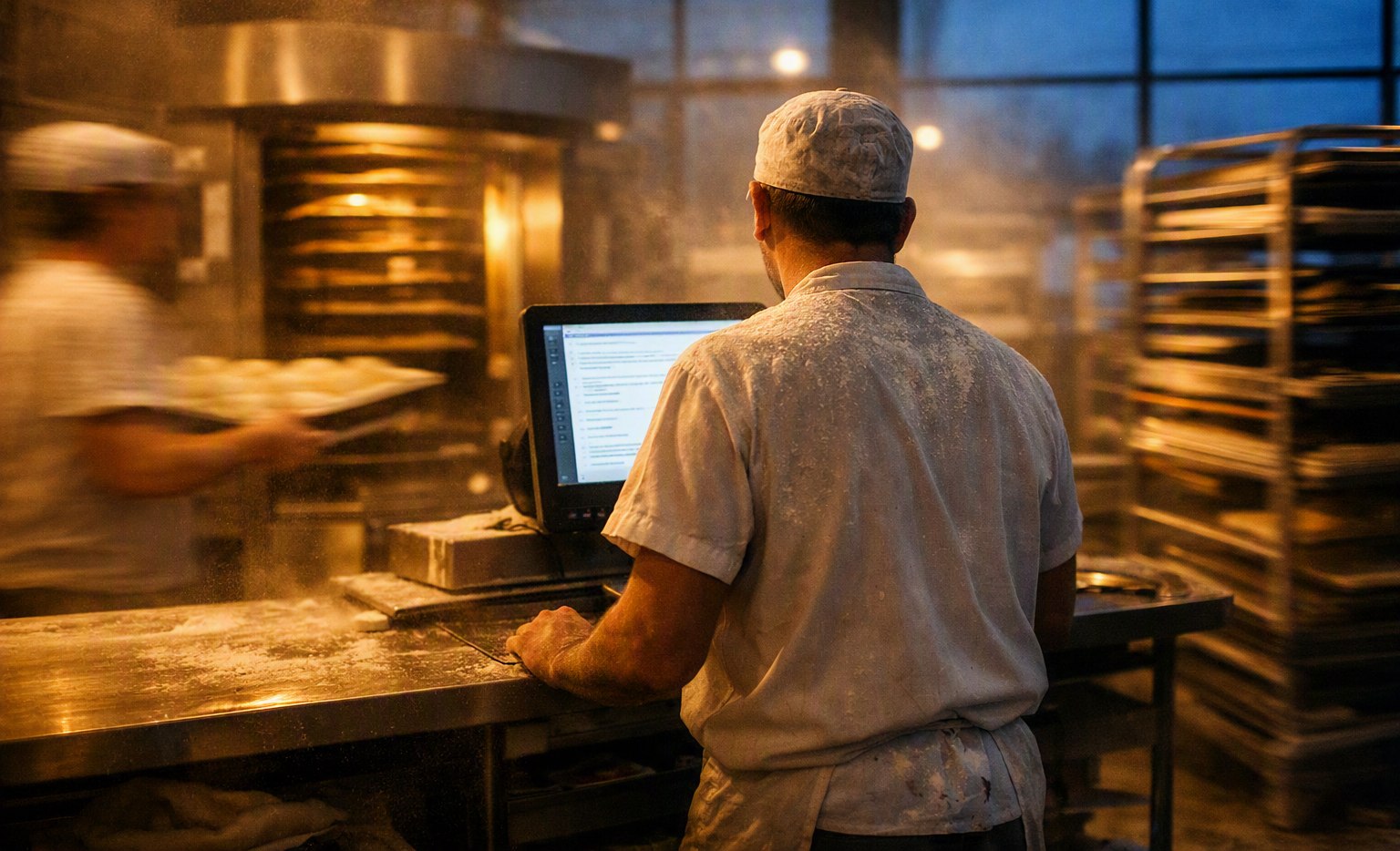
Bread, pastry, viennoiserie, shaping, packing: each trade has its list on screen rather than on paper, with the actions that go with it. The packer marks a batch done, customer by customer, and that batch drops out of everyone’s queue.
The till, synced to the web and to management
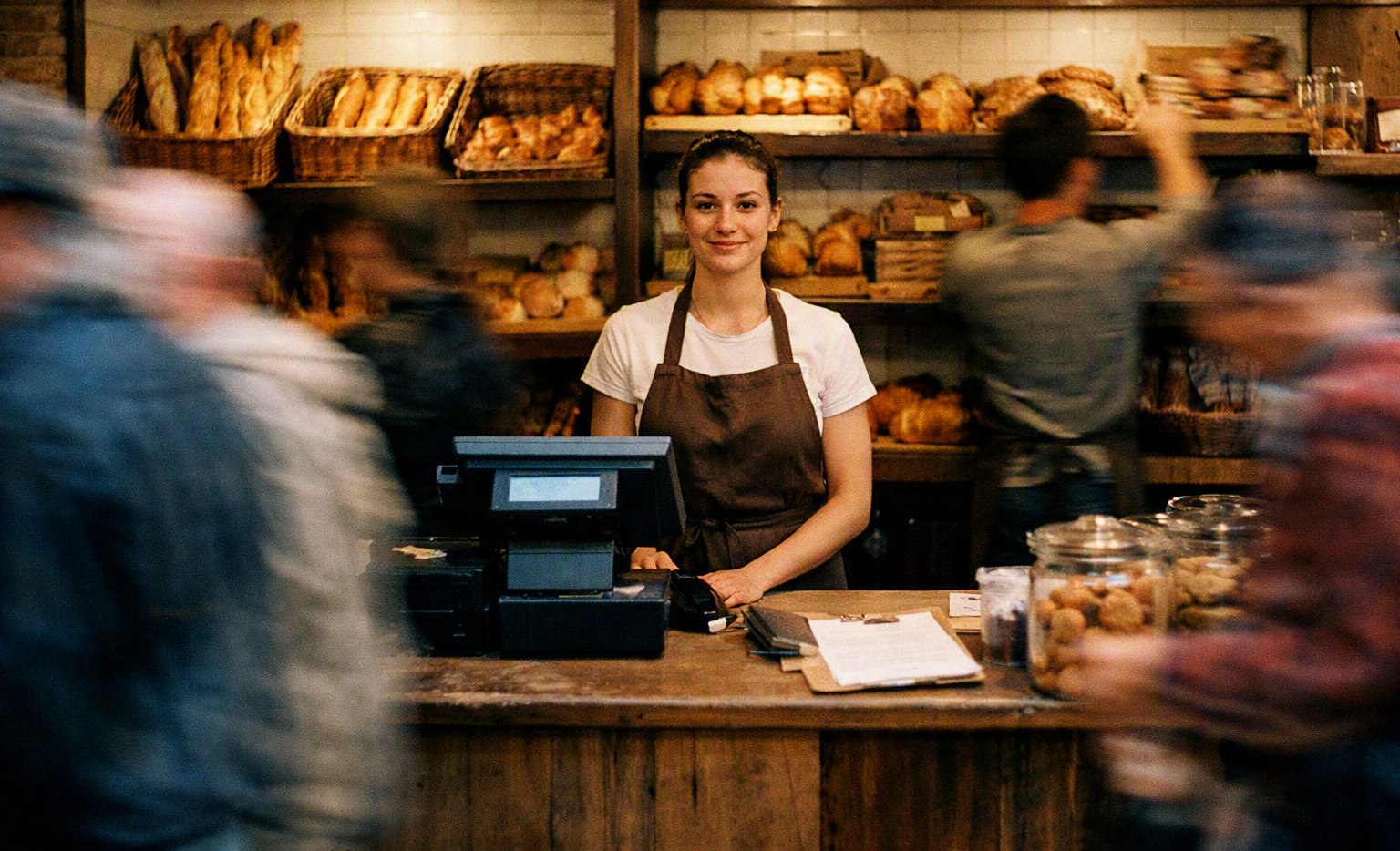
The tills sync continuously: sales are available to managers in real time. The same tills handle goods received, the evening stock count and staff clock-in. And if the internet goes down mid-rush, they keep working — the data goes back up as soon as the connection returns.
Results
- [01] 9,000 orders a year, from the customer portal through to the invoice.
- [02] Six shops and seven tills on one system, in real time.
- [03] Seasonal peaks read year over year. Christmas is no longer planned from memory.