
CASE STUDY Emballages Eco-Pack
The ERP shaped to the process
Client
The problem
Off-the-shelf ERPs, built around fixed catalogues, cannot handle that made-to-order logic.
So the company had to choose: reshape the plant around generic software, or build software that mirrored the plant exactly.
The challenge
Fitting two plants into software when no software would fit them.
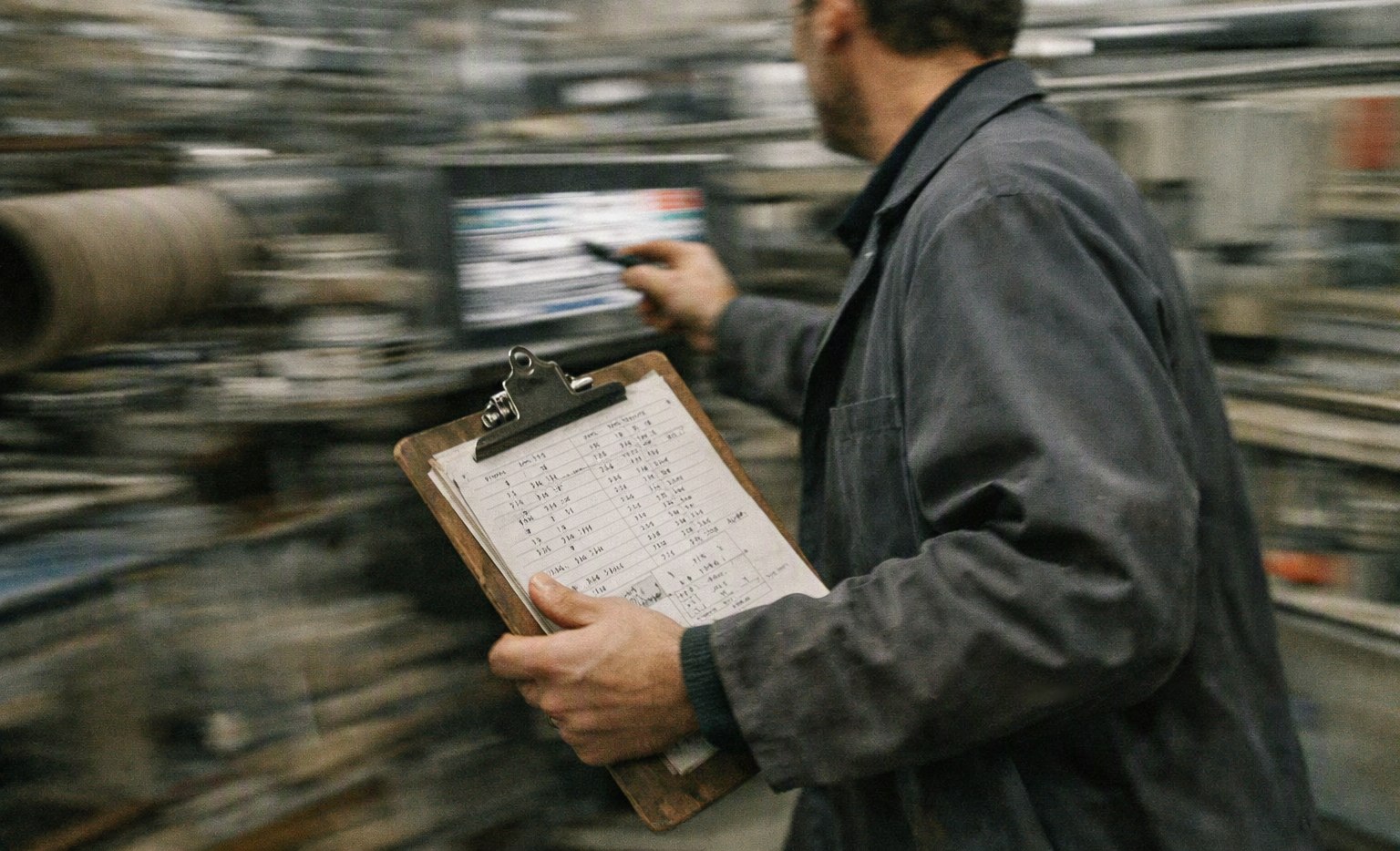
In 2018, production was run on paper, backed by a few Excel files and Acomba at the end of the chain. The information existed, but it was spread across three disconnected systems. An order was taken at the office, rewritten for the floor, then keyed in again for invoicing — each transcription adding one more chance of error.
Eco-Pack had assessed the ERPs on the market. None could handle their production logic without forcing a major change to their methods. Rather than reshape twenty-five years of know-how to fit a standard package, the company had software developed that follows its processes exactly.
What we built
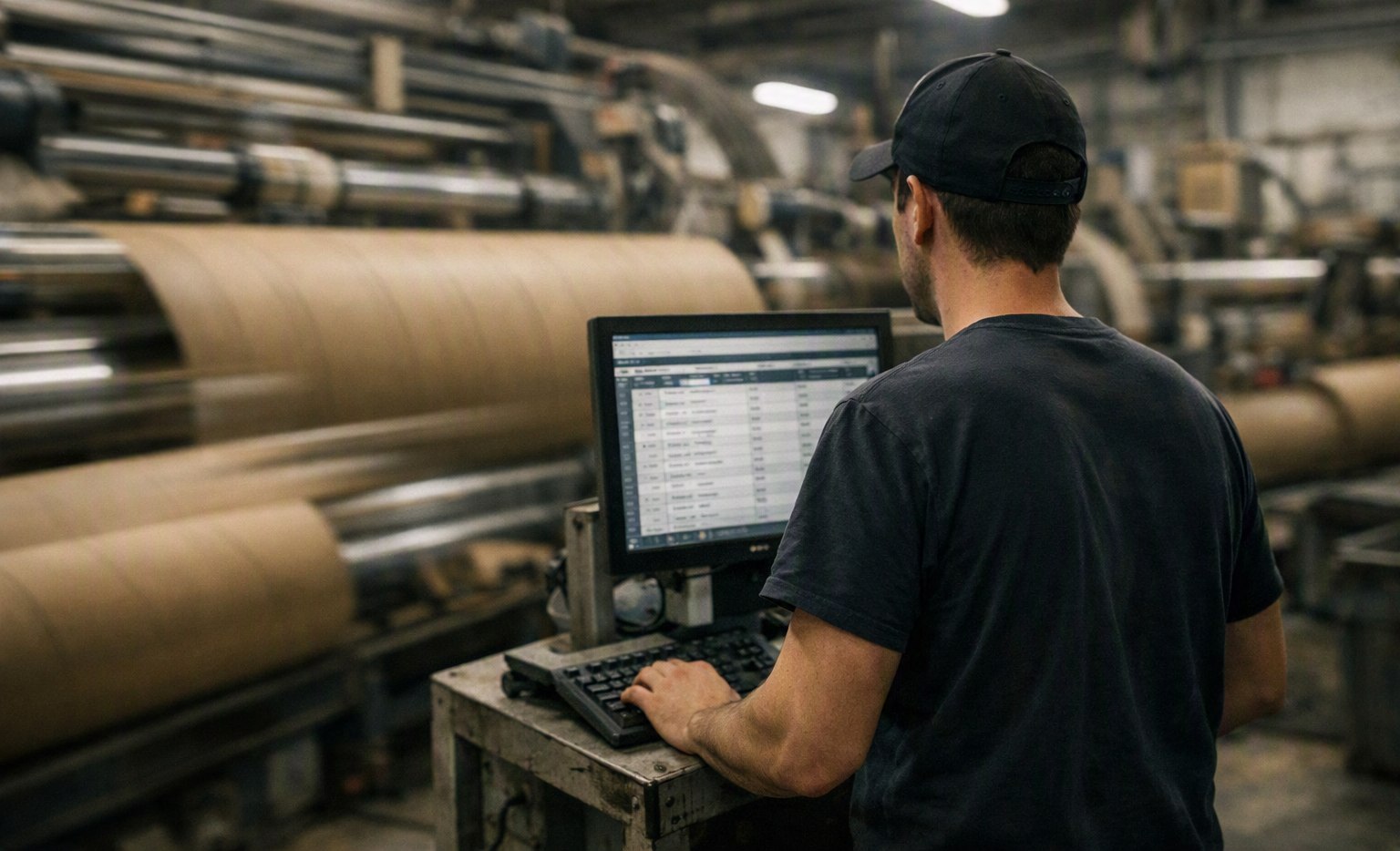
The custom desktop software — the control desk
Orders, customers, products, purchasing, inventory, shipping, invoicing, HR: everything sits in one system.
Production is planned and tracked in real time, from the order coming in through to shipping.
Software built entirely to measure, designed to mirror Eco-Pack’s operational reality exactly.
The floor, live
Every employee clocks in at their station and sees their task list straight away: what is running, what is coming, the quantities made and the quantities left.
Quality checks are triggered automatically by the system and configured by the foreman, who decides which tests to run and when.
Production planned down to the line
Every product has its own manufacturing routing, spread over several machines and workstations, with its own specifics. Planning, kanban inventory and shipping all rest on the information held centrally in the system — no longer on spreadsheets kept alongside.
You look, you plan, you run.
Data that reports itself
Machines and PLCs feed the statistics directly. EDI connects the suppliers, labels print from the system, and an online ordering module lets customers place their own orders.
All of that data, gathered in one place — the ERP — comes back out as daily reports or one-off queries.
The information is centralised, accessible… and reliable.
Results
- [01] 2,840 orders and production runs handled by the system in 2025.
- [02] Two plants, one system — from purchase order to the invoice in Acomba.
- [03] Zero monthly licence. The system is theirs.
The time saved is considerable, and the system’s stability says a good deal about how solidly it was built.