
CASE STUDY Recurring engagements
The warehouse at hand
The setting
The need
The challenge
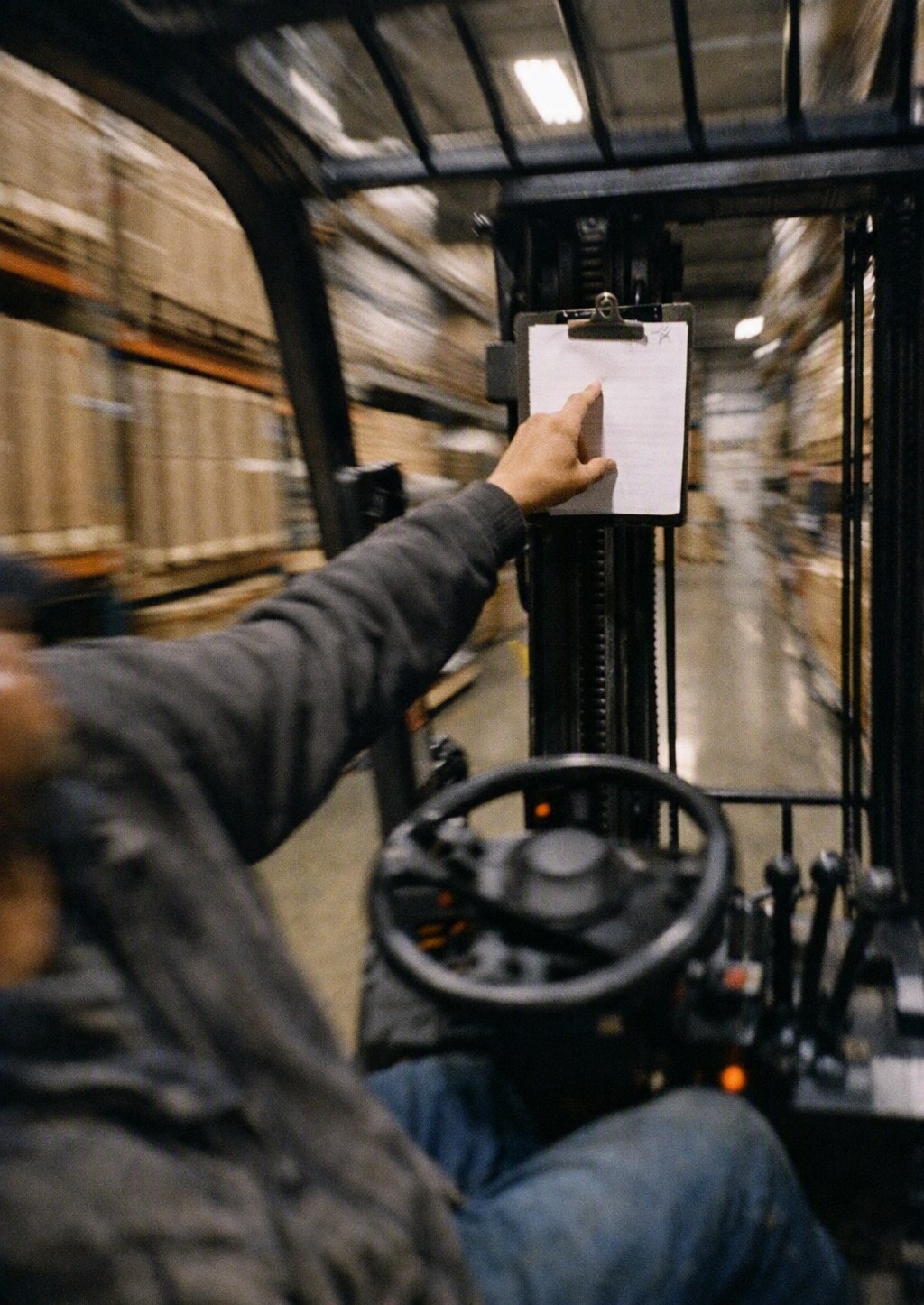
A forklift driver doesn’t climb down to go type a line at the office.
A warehouse can’t be captured on a keyboard. A pallet move that has to be written down somewhere else is a move that, sooner or later, won’t be written down: you record it later, you record it from memory, or you don’t record it. The gap between the inventory on screen and the inventory on the floor widens on its own, one omission at a time.
So receiving, shipping and counting have to come all the way down to the forklift, on a device that takes the knocks — and hook onto the system already in place without stopping production.
The whole warehouse in one hand
Receiving
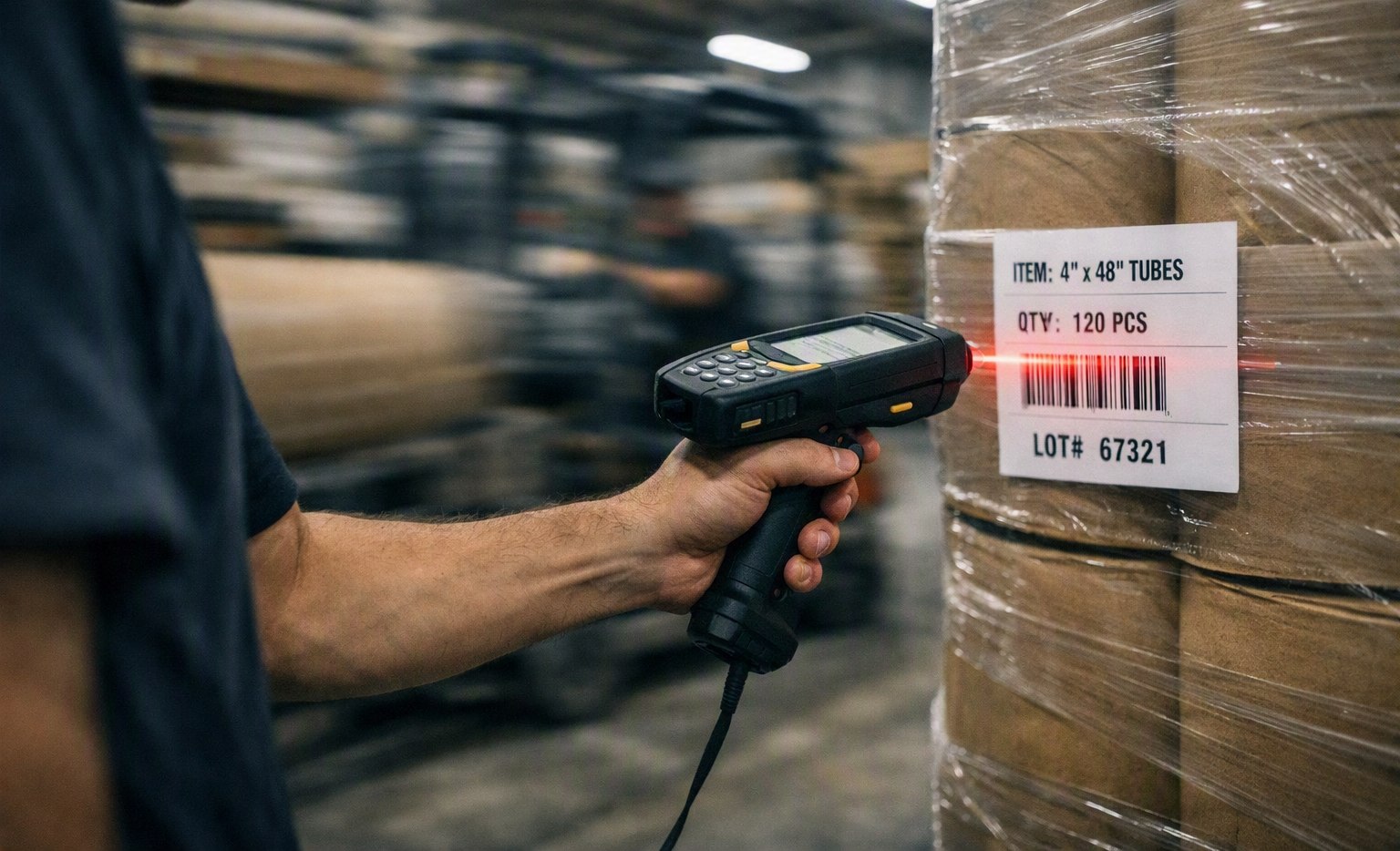
Goods come in by scan. The purchase order closes, inventory goes up, and the pallet has a known location the second it touches the floor.
Moves
Every pallet or raw material move is recorded on the spot, as it happens. The screen shows the warehouse as it is now, not as it was yesterday afternoon.
Cycle counting
Counting happens continuously, section by section, while the plant runs. No more shutting production down for one big count a year.
Shipping and labels
Loads are validated by scan, against the order. And labels print straight from the device to the plant’s printers, without going through a workstation.
What it changes
- [01] Inventory corrects itself continuously, instead of in one big operation once a year.
- [02] Receiving, moves, counting and shipping on a single device.
- [03] Grafted onto the existing management system, without replacing it or rewriting anything.